
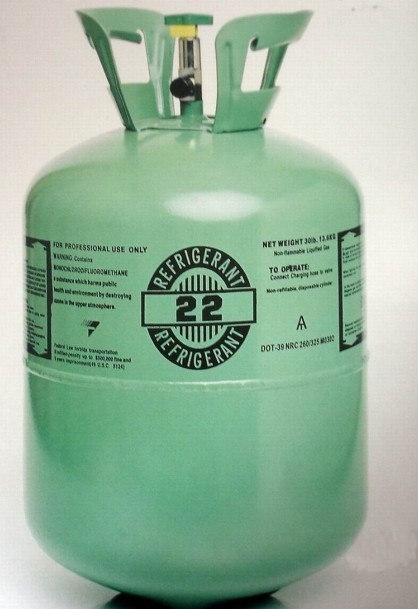
R22 Refrigerant Gas – Keep Your Older Air Conditioners Running
Technical Specifications
| Property | Value |
|---|---|
| Product | R22 Refrigerant Gas |
| Chemical name | Chlorodifluoromethane |
| Chemical formula | CHClF₂ |
| CAS number | 75-45-6 |
| Refrigerant type | HCFC (hydrochlorofluorocarbon), single component |
| Molecular weight | 86.47 g/mol |
| Boiling point (at 1 atm) | –40.8 °C |
| Critical temperature | 96.1 °C |
| Critical pressure | 4.99 MP |
Description
Many Kenyan offices, hotels, banks and factories still rely on air conditioners installed years ago. Most of these units run on R22, and they need the right gas to keep cooling. At Wisdo Merchants, we supply R22 refrigerant gas to HVAC technicians, facility managers and maintenance teams across Nairobi and Kenya.
R22 (chemically known as chlorodifluoromethane, or HCFC-22) was the world’s most popular air conditioning gas for decades. It cools reliably, works at moderate pressures and suits a huge range of equipment. However, it contains chlorine, so countries are gradually phasing it out to protect the ozone layer. That makes a dependable supplier more important than ever.
Features and Benefits of R22 Refrigerant Gas
- Proven performance. It delivers steady cooling in air conditioners, cold rooms and chillers across hot climates.
- Single-component gas. It does not separate like blends. Therefore, you can top up a system without the composition shifting.
- A1 safety rating. ASHRAE classifies it as A1, meaning low toxicity and no flame spread under normal conditions.
- Works with mineral oil. Older R22 compressors run on mineral oil, so servicing needs no oil change.
- Extends equipment life. Above all, the correct gas lets you keep existing units working instead of replacing them early.
For building owners, this means postponing costly replacements. Meanwhile, technicians can service older systems exactly as the manufacturer intended.
Technical Specifications
| Property | Value |
|---|---|
| Chemical name | Chlorodifluoromethane |
| Chemical formula | CHClF₂ |
| CAS number | 75-45-6 |
| Refrigerant type | HCFC, single component |
| Molecular weight | 86.47 g/mol |
| Boiling point (at 1 atm) | –40.7 °C |
| Critical temperature | 96.2 °C |
| Critical pressure | 4.94 MPa |
| Ozone Depletion Potential | 0.055 |
| Global Warming Potential (100-yr) | 1,810 |
| ASHRAE safety class | A1 |
| Compatible lubricants | Mineral oil, alkylbenzene oil |
Applications and How to Use R22 refrigerant gas
- Split and window air conditioners installed before the switch to R410A
- Ducted and packaged units in offices, banks and shopping centres
- Cold rooms and commercial refrigeration
- Water chillers in hotels and commercial buildings
- Industrial process cooling systems
Servicing an Older Split AC
Picture a bank branch where a ten-year-old split unit has lost cooling. First, the technician connects R22 gauges and checks the pressures. Next, they find and repair the leak, since topping up a leaking system wastes scarce gas. Then they pull a deep vacuum to remove air and moisture. Finally, they charge R22 by weight, following the unit’s nameplate.
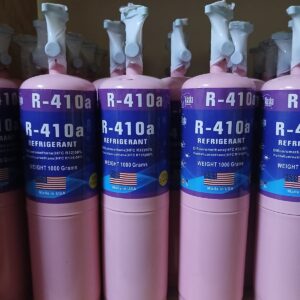
Never put R22 into an R410A unit, because the two systems use different oils and pressures.
Planning Ahead: The R22 Phase-Out
Under the Montreal Protocol, developing countries are reducing R22 supplies step by step, with a near-complete phase-out by 2030. As a result, availability will tighten and prices may rise over time. For this reason, owners of older systems should fix leaks promptly and recover gas during repairs. When a unit reaches the end of its life, consider modern equipment that runs on our HFC-410A for split air conditioners.
Safety and Handling
- Wear protective gear. Use safety goggles and insulated gloves. Liquid R22 causes frostbite on skin and eyes.
- Ventilate the work area. The vapour is heavier than air and can displace oxygen in plant rooms and ceiling voids.
- Keep away from flames. High heat breaks R22 down into toxic and corrosive gases.
- Store cylinders properly. Keep them upright in a cool, shaded place below 50 °C.
- Never vent to the atmosphere. R22 harms the ozone layer, so always recover it with proper equipment.
- Use trained technicians. Only qualified HVAC and refrigeration personnel should charge systems.
Frequently Asked Questions
Is R22 still legal to use?
Yes. Existing R22 systems can still be serviced. However, supplies are shrinking under the phase-out, so buy from a reliable supplier and repair leaks promptly.
Can I put R410A in my R22 air conditioner?
No. R410A runs at much higher pressures and needs a different oil. An R22 unit must stay on R22 or be retrofitted by a qualified technician with an approved alternative.
What can replace R22 in an existing system?
Retrofit gases such as R407C or R422D can work in some systems. Each one has its own oil and charging requirements, so a technician should assess the unit first.
Which oil works with R22?
R22 systems normally use mineral oil or alkylbenzene oil.
Do you deliver outside Nairobi?
We offer same-day delivery once your order is confirmed, subject to stock availability. Call or email our sales team to confirm stock and arrange delivery to your site.
Order R22 from Wisdo Merchants
Older air conditioners deserve the right gas to keep them running. Our R22 refrigerant gas helps your team restore full cooling and extend equipment life. Moreover, you can browse all the cooling gases we stock for your other projects.
Visit us: Dar es Salaam Road, Off Enterprise Road, Industrial Area, Nairobi
Call: +254 795 938305
Email: sales@wisdomerchants.com
Reviews
There are no reviews yet.