
Refrigeration Vacuum Pump in Nairobi | Wisdo Merchants
Technical Specifications
| Property | Value |
|---|---|
| Type | Oil-sealed rotary vane vacuum pump |
| Use | Evacuating AC and refrigeration systems |
| Connection | Service hose via manifold gauge set |
| Lubrication | Vacuum pump oil |
| Typical applications | Split ACs, fridges, freezers, cold rooms, chillers |
Request a quote for this product
Call or message us to confirm stock, pricing and delivery.
- Genuine brands
- Same-day delivery in Nairobi, subject to stock
- Technical advice from our team
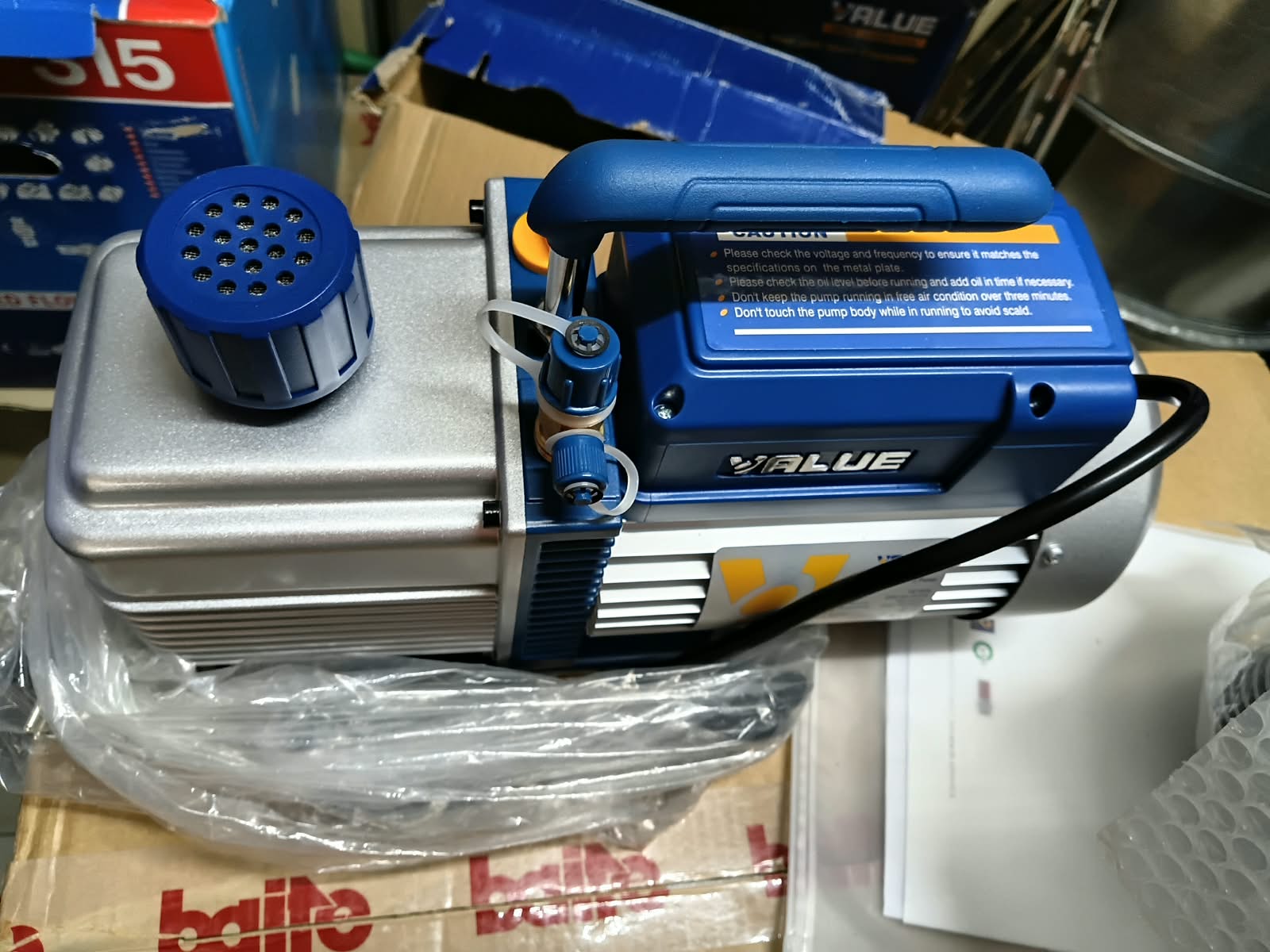
Refrigeration Vacuum Pump for AC and Fridge Installations
Air and moisture are the hidden enemies of every cooling system. Left inside the pipes, moisture mixes with refrigerant oil to form acids, freezes in the expansion device and slowly destroys the compressor. That’s why no AC or fridge should be charged without a proper evacuation. A refrigeration vacuum pump does exactly that job. At Wisdo Merchants, we supply vacuum pumps to AC installers, refrigeration technicians and service workshops across Nairobi and Kenya.
A vacuum pump draws air and moisture out of the system’s pipework. As the pressure drops, any water inside boils away at room temperature and is pulled out. As a result, the system is clean and dry before refrigerant goes in, which protects the compressor and keeps cooling efficient for years.
Features and Benefits of the Refrigeration Vacuum Pump
- Removes air and moisture. A deep vacuum boils off water and pulls out non-condensable gases that reduce cooling.
- Protects the compressor. Dry systems avoid acid formation, oil breakdown and early compressor failure.
- Stops ice blockages. Removing moisture prevents ice forming in capillary tubes and expansion valves.
- Faster, cleaner installations. A reliable pump cuts evacuation time on every job.
- Oil-sealed design. Rotary vane pumps use special vacuum pump oil to reach a deep vacuum.
For technicians, this means fewer callbacks and longer-lasting installations. Meanwhile, clients get systems that cool efficiently from day one.
Technical Specifications
| Property | Value |
|---|---|
| Type | Oil-sealed rotary vane vacuum pump |
| Brand | VALUE |
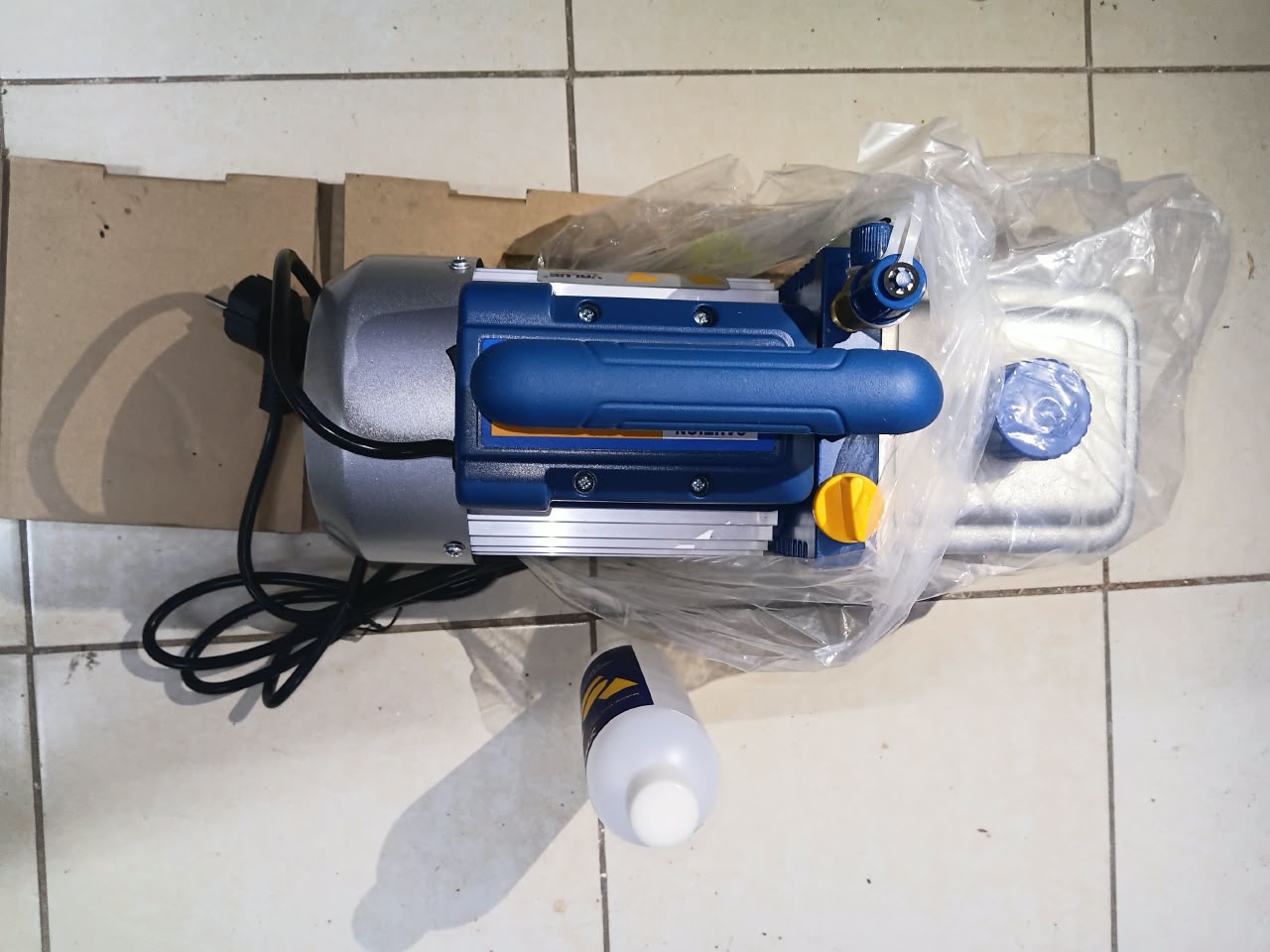
| Supplied with | Bottle of vacuum pump oil |
| Use | Evacuating AC and refrigeration systems |
| Connection | Service hose via manifold gauge set |
| Lubrication | Vacuum pump oil |
| Typical applications | Split ACs, fridges, freezers, cold rooms, chillers |
Applications of the Refrigeration Vacuum Pump and How to Use It
- New split AC installations before releasing or adding refrigerant
- Fridge and freezer repairs after a compressor or pipe replacement
- Cold room and chiller commissioning
- Removing moisture from systems opened for repair
- Leak checking, by watching whether the vacuum holds
Evacuating a New Split Unit
Picture an installer who has just finished connecting a split AC’s copper lines with our flaring tool kit. First, they connect the vacuum pump to the yellow hose of our professional dual gauge set and attach the blue hose to the service port. Next, they open the gauge valves, start the pump and run it until the system reaches a deep vacuum. After that, they close the valves, switch off the pump and watch the gauge to confirm the vacuum holds. Finally, they open the unit’s valves or charge the system with the correct gas, such as our low-GWP HFC-32 for inverter units.
Look After Your Pump
The pump’s oil absorbs the moisture it pulls from systems, so it wears out with use. Therefore, change the oil regularly, ideally after every few jobs or whenever it looks cloudy. Fresh oil lets the pump reach a deeper vacuum and extends its life.
Safety and Handling
- Never run the pump on a pressurised system. Recover all refrigerant first, because pressure can blow oil out of the pump.
- Don’t run it with the inlet open for long. The pump’s label warns against running in free air for more than three minutes.
- Check the oil level before use. Running the pump without enough oil damages the vanes.
- Use the right power supply. Match the pump’s voltage to your supply.
- Close the valves before switching off. This stops oil being drawn back into the hoses and system.
- Keep the exhaust clear. The exhaust releases oil mist, so work in a ventilated area.
- Store upright and capped. Cap the inlet to keep dust and moisture out.
Frequently Asked Questions
Why do I need a vacuum pump if I’m only adding gas?
If the system has been opened, it contains air and moisture. These must be removed before charging, or they will damage the compressor and reduce cooling.
How long should I run the pump?
It depends on the system size and the pump’s capacity. Run it until the system reaches a deep vacuum, then check that the vacuum holds.
What oil does it use?
It uses special vacuum pump oil. Don’t use compressor oil or engine oil.
What is the difference between single-stage and two-stage pumps?
A two-stage pump reaches a deeper vacuum, which suits larger systems and high-pressure refrigerants. A single-stage pump suits smaller jobs.
Do you deliver outside Nairobi?
We offer same-day delivery once your order is confirmed, subject to stock availability. Call or email our sales team to confirm stock and arrange delivery to your site.
Order a Refrigeration Vacuum Pump from Wisdo Merchants
Every reliable installation starts with a dry, clean system. Our refrigeration vacuum pump helps AC and fridge technicians evacuate systems properly before every charge. Furthermore, you can browse our refrigeration accessories to complete your toolbox.
Visit us: Dar es Salaam Road, Off Enterprise Road, Industrial Area, Nairobi
Call: +254 795 938305
Email: sales@wisdomerchants.com

Reviews
There are no reviews yet.