
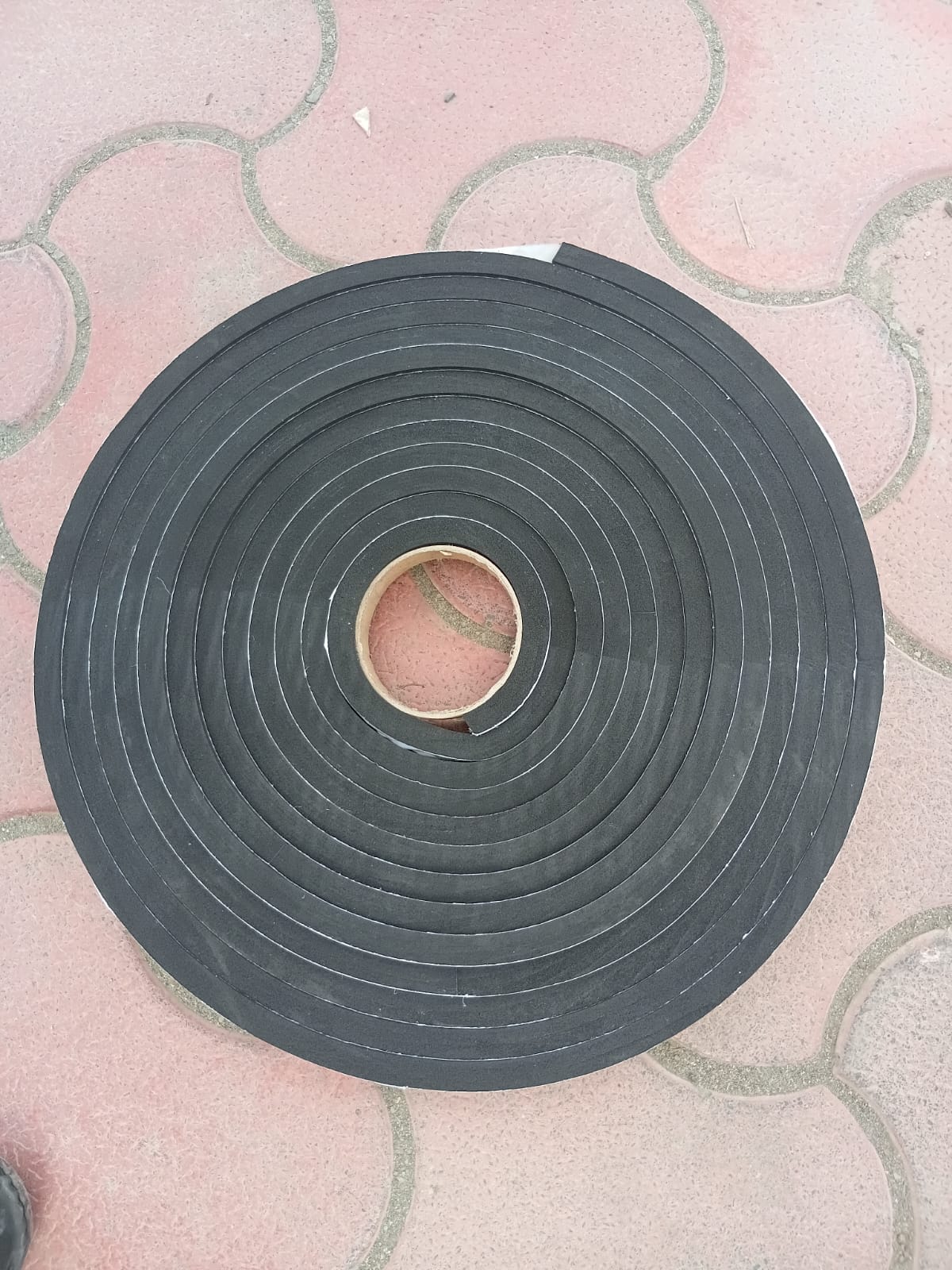
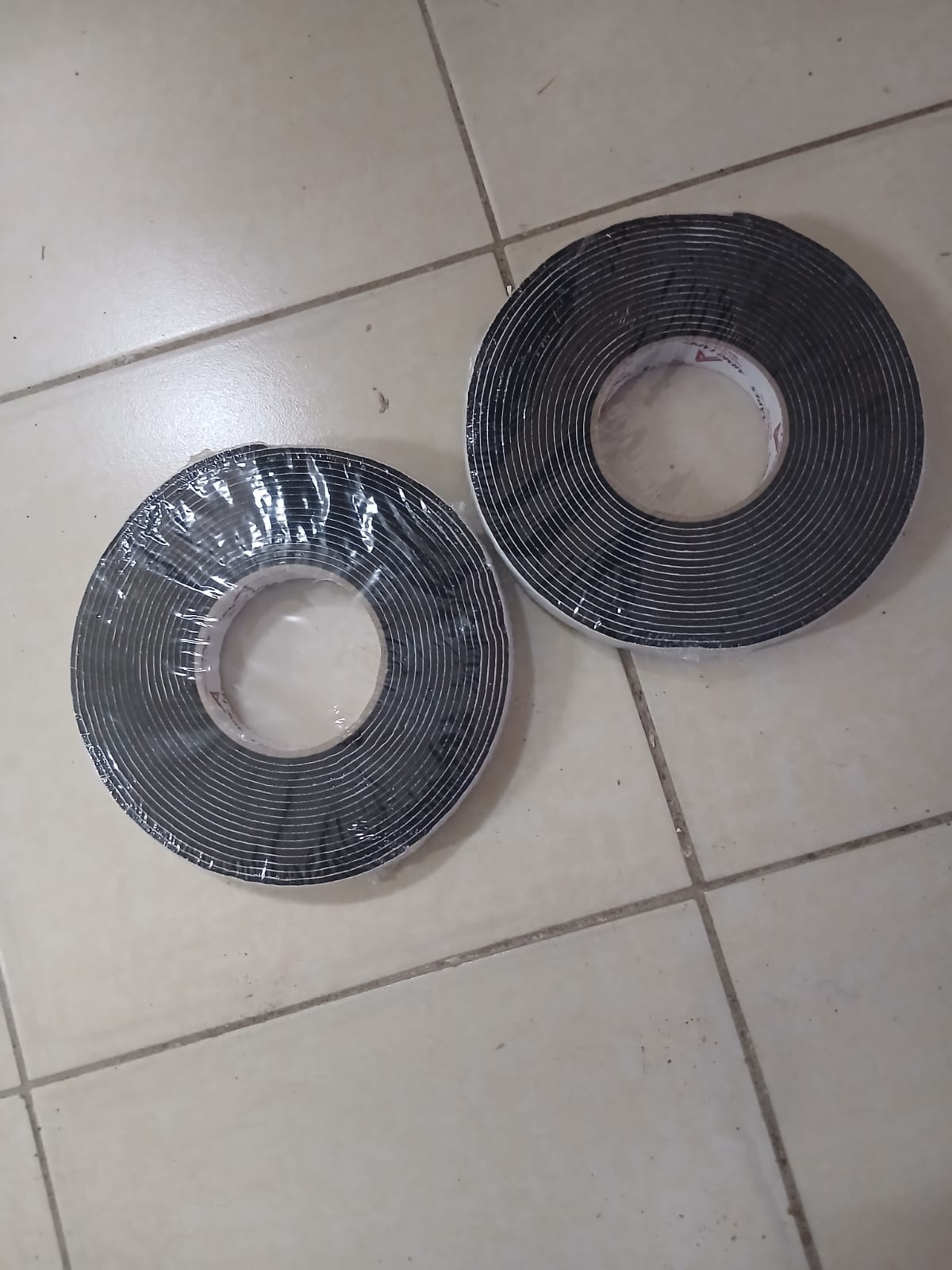
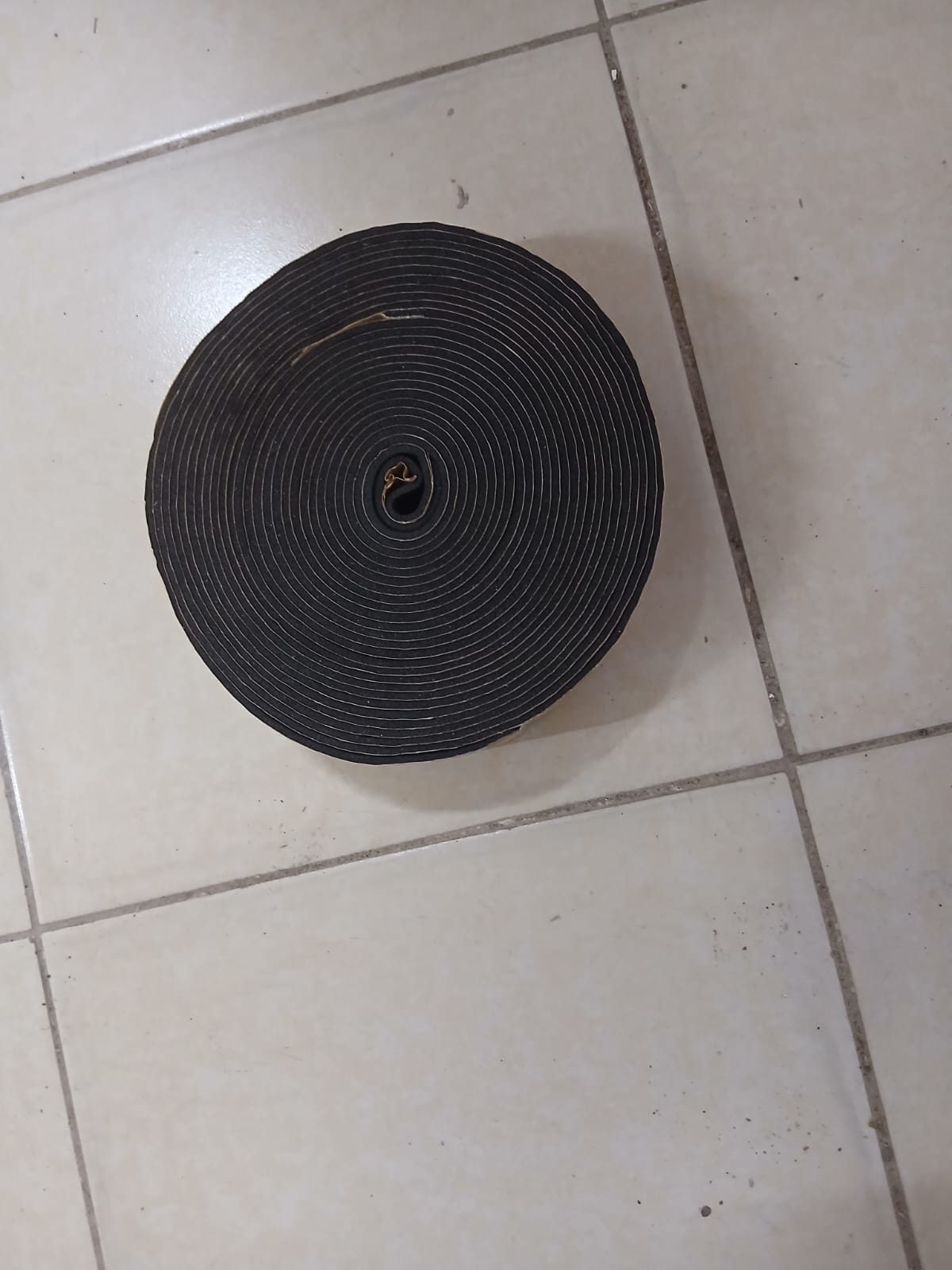
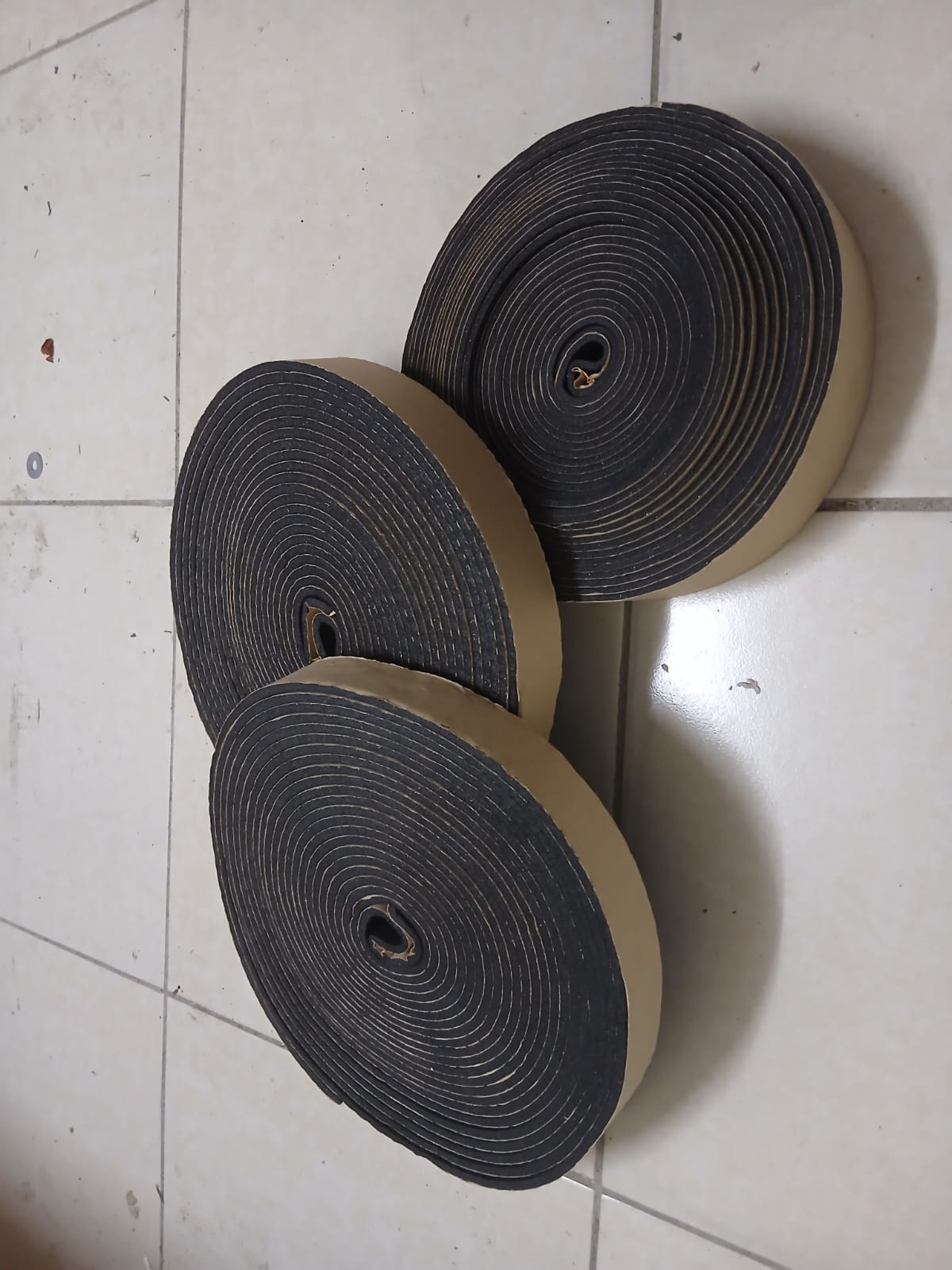
Self-Adhesive Rubber Foam Tape
Pipe insulation only works if it is continuous. A small gap at a joint, a valve or a bend lets the cold copper sweat, and water then runs along the pipe. Rubber foam tape closes those gaps. It…
- Self-adhesive backing.
- Soft, flexible foam.
- Seals insulation joints.
- Cushions and seals.
- Easy to cut.
Prices on request. We confirm stock, price and delivery when you get in touch.
In stock
- Same-day deliveryOn confirmed orders, subject to stock
- Genuine productsTrusted brands for industry
- Technical adviceHelp choosing the right part
- Industrial Area, NairobiDar es Salaam Road, off Enterprise Road
Self-Adhesive Rubber Foam Tape for Insulation Joints
Pipe insulation only works if it is continuous. A small gap at a joint, a valve or a bend lets the cold copper sweat, and water then runs along the pipe. Rubber foam tape closes those gaps. It is a black foam strip with an adhesive backing that sticks over joints and fittings. At Wisdo Merchants, we supply rubber foam tape to AC installers, refrigeration technicians and maintenance teams across Nairobi and Kenya.
The tape comes on a roll with a white release liner. Peel the liner off and press the foam onto a clean, dry surface. Because it is a soft foam, it follows curves and fills small gaps that rigid tape cannot.
Features and Benefits of the Rubber Foam Tape
- Self-adhesive backing. Peel off the liner and stick it straight on, with no glue to mix.
- Soft, flexible foam. It wraps around bends, valves and uneven shapes.
- Seals insulation joints. It closes the gaps where tubes meet, so condensation cannot start.
- Cushions and seals. It also works as a gasket or padding between surfaces.
- Easy to cut. Scissors or a knife cut it to any length.
For technicians, this means a finished insulation job with no weak points. Meanwhile, owners get dry ceilings and fewer water stains.
Key Terms Explained
- Release liner: The white backing strip that protects the adhesive until you use the tape.
- Closed-cell foam: Foam made of sealed bubbles that resists water and air.
- Butt joint: Where two lengths of insulation meet end to end. It must be sealed.
- Condensation: Water that forms on a cold surface when warm, moist air touches it.
Technical Specifications
| Property | Value |
|---|---|
| Product | Self-adhesive rubber foam tape |
| Colour | Black |
| Backing | Adhesive with white release liner |
| Supplied as | Rolls |
| Widths and thicknesses | Ask our team for the sizes in stock |
| Typical use | Sealing pipe insulation joints, fittings and gaps |
Applications of the Rubber Foam Tape and How to Use It
Pipe insulation
- Sealing butt joints between insulation tubes
- Wrapping valves and fittings
- Sealing slit seams on retrofitted insulation
- Covering exposed copper at flare nuts
AC and refrigeration
- Finishing split AC line sets
- Insulating cold room pipe fittings
- Sealing around pipes where they enter walls
General sealing
- Gaskets between duct flanges
- Padding to reduce rattles and vibration
- Sealing small gaps around panels
Sealing the Joints on a Cold Room Suction Line
Picture a technician finishing the suction line on a cold room. First, they make sure every insulation tube is butted tightly. Next, they wipe the joints clean and dry. After that, they peel back the liner and wrap the rubber foam tape around each joint and valve, overlapping as they go. Finally, they check that no copper shows anywhere along the line.
Products to Use with It
Use it with our Superlon rubber insulation pipe and rubber foam insulation sheet. For an outer protective wrap, choose Durotape PVC tape, or aluminium tape for duct joints.
Safety and Handling
- Clean and dry first. Adhesive will not hold on dusty, oily or wet surfaces.
- Do not stretch too much. Overstretched foam pulls back and lifts at the ends.
- Keep away from heat. Do not apply near brazing or hot surfaces.
- Store cool and dry. Heat and sunlight weaken the adhesive before use.
Frequently Asked Questions
What is rubber foam tape used for?
Mainly to seal joints, seams and fittings on pipe insulation. It also works as a gasket or padding.
How do I apply it?
Clean and dry the surface, peel off the liner and press the tape firmly in place, overlapping slightly on wraps.
Will it stick to rubber insulation?
Yes, on clean, dry insulation. Press it firmly so the adhesive bonds fully.
Can I use it on its own to insulate a pipe?
It is meant for joints and short sections. For full pipe runs, use insulation tube and seal the joints with the tape.
Which sizes do you have?
Ask our team for the widths and thicknesses in stock.
Can it be used outdoors?
Yes, but cover it with PVC tape where it is exposed to strong sun.
Can I cut it?
Yes, with scissors or a sharp knife.
How should I store it?
Keep rolls in a cool, dry place out of direct sunlight.
Does it stop vibration noise?
It can cushion light rattles between panels or pipes and their supports.
How do I place an order?
Call, email or WhatsApp our sales team with the size and number of rolls. We will confirm stock and send a quote.
Order Rubber Foam Tape from Wisdo Merchants
Close every gap in your insulation with our self-adhesive rubber foam tape. You can also browse our insulation range to complete the job.
Visit us: Dar es Salaam Road, Off Enterprise Road, Industrial Area, Nairobi
Call: +254 795 938305
WhatsApp: +254 795 938305
Email: sales@wisdomerchants.com
Reviews
There are no reviews yet.